My neighbor asked me this question last week: “Zeus just turned 6. Is he a senior dog yet?”
She seemed surprised when I said yes. Zeus is a Great Dane, and at 6 years old, he’s absolutely a senior – actually equivalent to about 50 in human years. Meanwhile, my mom’s 10-year-old Chihuahua, Peanut, is just entering her senior years.
This confusion happens all the time. The answer to “when is a dog considered a senior?” isn’t a simple number – it completely depends on your dog’s size.
Let me explain exactly when your dog becomes a senior, what changes to expect, and how to adjust their care.
The Quick Answer: It Depends on Size
Here’s the reality: there’s no single age when all dogs become seniors. A Chihuahua and a Great Dane born on the same day will enter their senior years at completely different times.
Senior dog age by size:
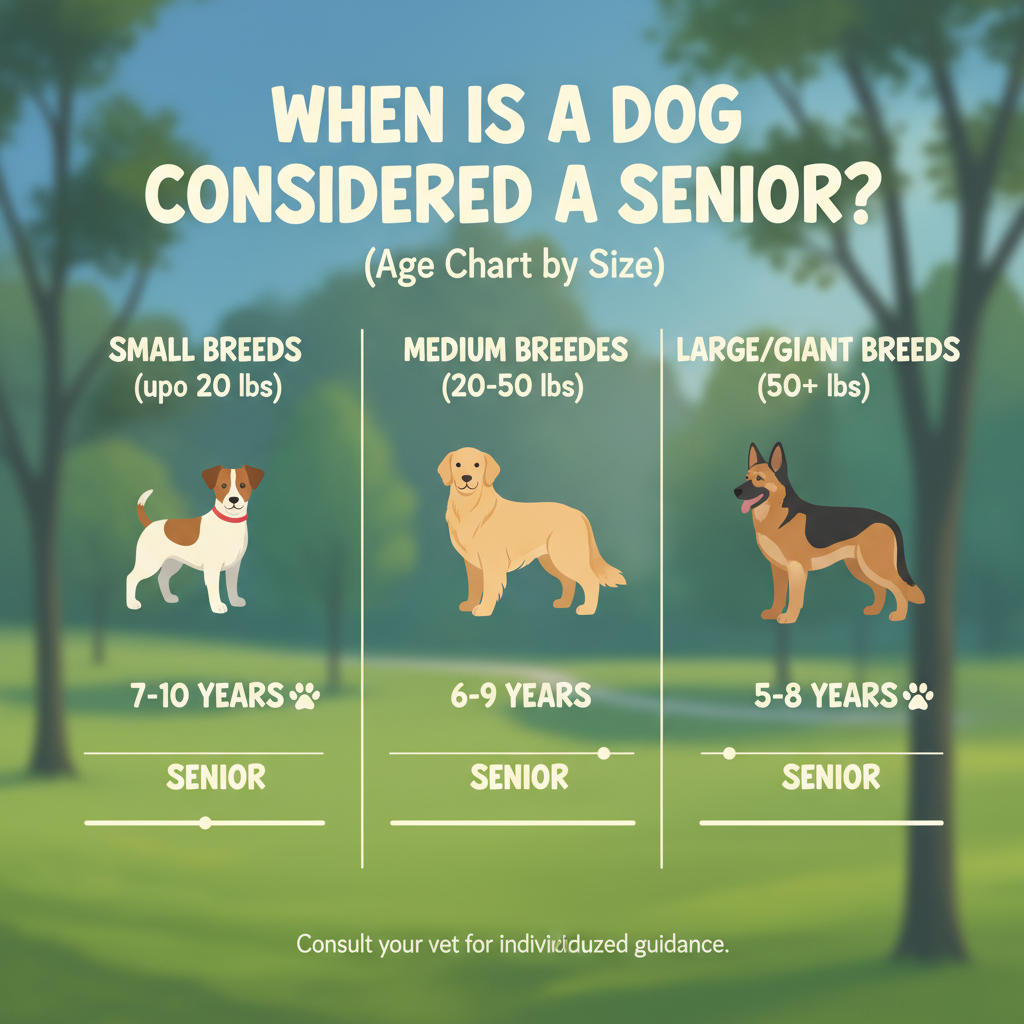
- Small dogs (under 20 lbs): Around 10-11 years old
- Medium dogs (21-50 lbs): Around 8-10 years old
- Large dogs (51-100 lbs): Around 6-8 years old
- Giant breeds (over 100 lbs): As early as 5-7 years old
Why such a big difference? Larger dogs age faster than smaller dogs. It’s one of the strange facts about dog aging – in most mammals, bigger animals live longer (think elephants vs. mice). But with dogs, it’s completely backwards.
Want to know your dog’s exact age in human years? Use our free dog age calculator to find out where they are in their life journey.
Complete Senior Dog Age Chart
Here’s a detailed breakdown of when dogs enter their senior years based on size:
| Dog Size | Weight Range | Senior Age Starts | Example Breeds | Human Age Equivalent |
|---|---|---|---|---|
| Small | Under 20 lbs | 10-11 years | Chihuahua, Yorkie, Maltese, Pomeranian | 56-60 years |
| Medium | 21-50 lbs | 8-10 years | Beagle, Cocker Spaniel, Border Collie | 54-64 years |
| Large | 51-100 lbs | 6-8 years | Golden Retriever, Labrador, German Shepherd | 48-60 years |
| Giant | Over 100 lbs | 5-7 years | Great Dane, Mastiff, St. Bernard | 43-57 years |
This explains why my neighbor’s Great Dane is a senior at 6, while small dogs like my mom’s Chihuahua can still be going strong at 10.
Why Size Matters So Much
Scientists have been studying this phenomenon for years, and here’s what they’ve found: large dogs grow incredibly fast during their first year of life. This rapid growth essentially “uses up” their bodies faster.
Think about it – a Great Dane puppy gains about 100 pounds in their first year. That’s an enormous amount of growth in a short time. Their organs work harder, their cells divide more rapidly, and they’re more prone to certain health issues as they age.
Meanwhile, a Chihuahua might only gain 5-6 pounds in their first year. Less strain on the body means a longer lifespan overall.
Research shows that for every 4.4 pounds of body mass, a dog’s life expectancy decreases by about one month. That’s why a 150-pound Mastiff might only live 7-10 years, while a 7-pound Yorkie can easily make it to 15-17 years.
Signs Your Dog Is Entering Their Senior Years
Age is just a number – what really matters is recognizing when your dog starts showing senior signs. Here’s what I’ve noticed with dogs I’ve known:
Physical Changes
Gray hair – Usually starts around the muzzle and eyes. My Golden Retriever, Max, started getting a “sugar face” around age 7.
Weight changes – Some seniors gain weight (less active), others lose it (dental issues, metabolism changes).
Cloudy eyes – You might notice a bluish-gray haze in their eyes. This is lenticular sclerosis and is normal aging (different from cataracts).
Stiff movements – Especially after sleeping or first thing in the morning. Arthritis is common in senior dogs.
Less jumping – If your dog used to leap onto the couch and now hesitates or needs help, that’s a sign.
Behavioral Changes
More sleeping – Senior dogs can sleep 16-18 hours a day (compared to 12-14 for younger adults).
Less playful – They might still want to play, but for shorter periods.
Confusion – Some seniors develop cognitive dysfunction (similar to dementia in humans).
Bathroom accidents – Even house-trained dogs might have occasional accidents.
Anxiety – Especially separation anxiety or anxiety during storms (didn’t bother them before).
Not sure how old your dog is in human terms? Check our complete guide on calculating dog years to human years to understand their true age.
When to Start Senior Dog Care
You don’t need to wait until your dog shows signs of aging. Start adjusting their care based on their size and age.
For Small Dogs (10-11 years)
Start senior care when they hit double digits. At this age:
- Switch to senior dog food (lower calories, joint support)
- Increase vet visits from annual to every 6 months
- Consider supplements (glucosamine for joints, omega-3s)
- Watch their weight carefully
For Medium Dogs (8-10 years)
Begin the transition around age 8:
- Senior formula food
- Bi-annual vet checkups
- Senior blood panel (catches kidney, liver issues early)
- Adjust exercise (shorter walks, more frequent)
For Large Dogs (6-8 years)
This is where many people get caught off guard. Large breeds need senior care earlier:
- Start senior food around age 6
- Twice-yearly vet visits are crucial
- Joint supplements are almost mandatory
- Watch for signs of hip dysplasia, arthritis
- Consider a softer bed (orthopedic dog beds help)
For Giant Breeds (5-7 years)
Giant breed owners know their time together is limited. Start early:
- Senior care begins around age 5
- Very frequent vet monitoring
- Joint health is the top priority
- Heart health screening (common in giants)
- Quality of life over quantity – keep them comfortable
Complete Senior Dog Care Checklist
Here’s everything you need to do once your dog reaches senior status:
Veterinary Care
Twice-yearly checkups (instead of annual) – Senior dogs can develop issues quickly. Six months is a long time in a senior dog’s life.
Senior blood panel annually – Checks kidney function, liver function, thyroid, and blood sugar. Catches issues before symptoms appear.
Dental checkups – Dental disease is incredibly common in seniors. Can affect heart, kidney, and liver health. Professional cleaning may be needed.
Monitor weight monthly – Write it down! Small changes add up. 2-3 pounds on a small dog is significant.
Nutrition Changes
Switch to senior formula food – Lower in calories (seniors are less active), higher in fiber (helps with digestion), added joint support (glucosamine, chondroitin), easier to digest proteins.
Adjust portion sizes – Many seniors need less food. But some need more (if losing weight). Ask your vet – don’t guess.
Consider supplements – Glucosamine/chondroitin for joints, omega-3 fatty acids for inflammation, probiotics for digestion. Always check with your vet first.
Exercise Adjustments
Shorter, more frequent walks – Instead of one 30-minute walk, try three 10-minute walks. Less strain on joints. Keeps them moving throughout the day.
Lower-impact activities – Swimming is excellent (if they like water), gentle fetch games, and short training sessions (mental stimulation). Avoid jumping and rough play.
Watch for pain signals – Limping, reluctance to go on walks, difficulty with stairs, and slowing down significantly.
Home Environment Changes
Orthopedic bed – Memory foam helps achy joints. Easier to get in/out of. Keep it in a warm spot (seniors get cold easily).
Ramps or stairs – For getting on furniture or into a car. Saves their joints. Prevents injuries.
Non-slip rugs – On hardwood or tile floors. Seniors can lose traction and slip easily. Especially important near food/water bowls.
Night lights – Senior dogs’ vision declines. Helps them navigate at night. Reduces anxiety.
Common Health Issues in Senior Dogs
Knowing what to watch for helps you catch problems early:
Arthritis and Joint Pain
Signs: Stiffness, limping, difficulty getting up, reluctance to climb stairs
What helps: Joint supplements, anti-inflammatory medications (vet-prescribed), gentle exercise, weight management, orthopedic bed
Kidney Disease
Signs: Increased thirst, frequent urination, decreased appetite, weight loss
What helps: Early detection through blood work, prescription diet, and medications
Why it matters: Very common in seniors, manageable if caught early
Dental Disease
Signs: Bad breath, difficulty eating, drooling, pawing at the mouth
What helps: Professional cleaning, dental chews, tooth brushing, dental-specific food
Why it matters: Bacteria from infected teeth can spread to the heart, kidneys, liver
Cognitive Dysfunction (Dog Dementia)
Signs: Confusion, getting lost in familiar places, staring at walls, forgetting training, and sleep changes
What helps: Mental stimulation, routine, medications (Anipryl), special diets rich in antioxidants
Heart Disease
Signs: Coughing (especially at night), rapid breathing, reduced stamina, fainting
What helps: Medications, low-sodium diet, moderate exercise
Why it matters: Particularly common in small breeds and some large breeds
Senior Dog Diet: What Changes?
Your senior dog’s nutritional needs shift as they age:
Lower Calories
Senior dogs are less active, so they need fewer calories. If you keep feeding the same amount, they’ll gain weight, which puts extra stress on already-achy joints.
Most senior formulas have about 20% fewer calories than adult formulas.
Higher Quality Protein
Older dogs need protein to maintain muscle mass, but it should be highly digestible. Look for named protein sources (chicken, beef, fish) as the first ingredient.
Added Joint Support
Most senior formulas include glucosamine and chondroitin. These help maintain cartilage and reduce inflammation in joints.
Easy to Digest
Senior dogs often have more sensitive stomachs. Smaller kibble, softer textures, and easily digestible ingredients help.
Special Considerations
Dental issues? Wet food or softened kibble might be necessary
Kidney disease? Special prescription diet with reduced protein and phosphorus
Heart disease? Low-sodium diet
Overweight? Weight management formula with even fewer calories
Always transition foods gradually over 7-10 days to avoid an upset stomach.
How Long Do Senior Dogs Live?
Once your dog becomes a senior, how much time do you have left together? Here’s the reality:
Small Dogs
- Become a senior at 10-11 years
- Can live to 15-17 years
- Senior stage lasts: 5-7 years
Small dog owners often have many years with their senior companions. My mom’s Chihuahua is 14 and still going strong – she’s been a “senior” for 4 years already.
Medium Dogs
- Become a senior at 8-10 years
- Can live to 12-14 years
- Senior stage lasts: 3-5 years
Large Dogs
- Become a senior at 6-8 years
- Can live to 10-12 years
- Senior stage lasts: 3-5 years
Max, my Golden Retriever, became a senior at 7 and lived to 13. We had 6 wonderful years of senior life together.
Giant Breeds
- Become a senior at 5-7 years
- Can live to 8-10 years
- Senior stage lasts: 2-4 years
This is the heartbreaking reality of giant breeds. My neighbor’s Great Dane, Zeus, is 6 (a senior) and might only have 2-4 more years. But she’s making every single day count.
Want to know exactly how old your dog is in human years? Our dog age calculator gives you precise results based on their size and age.
Making the Most of the Senior Years
Here’s what I’ve learned from my own senior dogs and watching friends go through this stage:
Focus on Quality of Life
It’s not about how long they live – it’s about how well they live. A senior dog who’s pain-free, comfortable, and happy is more important than adding a few months of suffering.
Create a Routine
Senior dogs thrive on predictability. Same feeding times, same walk times, same bedtime. Changes in routine can cause anxiety.
Keep Them Comfortable
Soft beds, warm spaces, gentle exercise, lots of love. Senior dogs have earned the right to be pampered.
Watch for Pain
Dogs hide pain instinctively. Watch for subtle signs: slower movements, reluctance to jump, changes in appetite, and different sleeping positions.
Don’t Skip Vet Visits
I can’t stress this enough – twice-yearly checkups can catch issues before they become serious. It’s worth every penny.
Enjoy Every Day
Take photos. Give extra treats. Sit with them more. These years go by fast, and you’ll treasure every moment you have.
When to Talk to Your Vet
Contact your vet if you notice:
- Sudden weight loss or gain (more than 10% of body weight)
- Changes in drinking or urinating habits
- Difficulty breathing or persistent coughing
- Limping or obvious pain
- Confusion or disorientation
- Loss of appetite lasting more than 24 hours
- Any lumps or bumps that appear or change
- Behavioral changes (sudden aggression, excessive anxiety)
Don’t wait to see if it gets better. With senior dogs, early intervention makes a huge difference.
Final Thoughts: Cherish the Senior Years
When is a dog considered a senior? Now you know it depends entirely on their size. Small dogs at 10-11, medium at 8-10, large at 6-8, and giant breeds as early as 5-7 years old.
But here’s what I want you to remember: becoming a senior isn’t something to dread. It’s a privilege many dog owners don’t get. These years, when approached with the right care and mindset, can be some of the best you have together.
Your senior dog has earned the right to slow down, to be pampered, to sleep in the sunny spot, and to get extra treats. They’ve given you years of loyalty and love – now it’s your turn to make their golden years truly golden.
Calculate your dog’s exact age and life stage with our free dog age calculator, then adjust their care accordingly. They deserve it.
Frequently Asked Questions
It depends on size! A 7-year-old small dog is about 44 in human years, a medium dog is 49, a large dog is 54, and a giant breed is 57. Use our calculator for exact results.
No, aging is natural. But you can help them age gracefully through: proper nutrition, regular exercise, preventive vet care, dental health, maintaining healthy weight, and mental stimulation.
Yes. Shorter, more frequent walks instead of long ones. Lower-impact activities like swimming. Avoid jumping and rough play. Watch for signs of pain or fatigue. Every dog is different - some 10-year-olds still love long hikes, others prefer gentle strolls.
Yes, completely normal. Senior dogs can sleep 16-18 hours per day. Make sure they have a comfortable, quiet place to rest.
Switch when your dog enters their senior years: small dogs at 10-11 years, medium at 8-10 years, large at 6-8 years, giant at 5-7 years. Always transition gradually over 7-10 days.
Absolutely! The saying "you can't teach an old dog new tricks" is false. Senior dogs can learn new things - it might just take a bit more patience and positive reinforcement.
"Senior" is typically the first stage of older life (the ages we discussed). "Geriatric" is the final stage - usually the last 25% of expected lifespan. A 15-year-old Chihuahua might be geriatric, while a 7-year-old Great Dane is "just" senior.